
Key Takeaways
- Gummies, oils, capsules, chewable tablets, and topicals differ in how their quantities are counted or measured and how their labels should be read.
- A counted unit offers a fixed labeled quantity per piece. An oil requires a volume measurement, while many topical packages do not define a measured application.
- Ingredients, extract category, package quantity, and batch documentation vary by product. The format name alone does not settle those questions.
- Compare price per labeled serving only when the serving definitions are clear. Do not equate an external topical application with an oral serving.
- This tool compares practical product attributes. It does not rank expected effects, recommend a format for a condition, or predict personal results.
Choose a Format by Understanding the Package
A shelf of CBD products can present the same ingredient in very different ways. A gummy jar invites you to count pieces. An oil bottle asks you to read volume markings. A capsule bottle provides counted units, while a topical container may describe the total amount in the package without telling you the weight of a typical application. Those differences affect how you compare the products before any question about personal use arises.
Our interactive product form comparison lets you select the formats you want to inspect and view their practical attributes side by side. You can focus on counted units, ingredients, measurement steps, packaging considerations, or documentation. The tool does not choose a winning format. It helps you build a comparison that matches the information on the actual labels.
If you searched CBD gummies vs oil or CBD oil vs capsules, start with those two columns. Then add another format only when it helps answer a real question. A smaller comparison can be more useful than a crowded table, especially when you are checking a particular bottle against a product you already understand.
How to Use the Product Form Comparison
Select two or more formats from gummies, oils, capsules, chewable tablets, and topicals. The table keeps the same row headings for every selected format. This makes it easy to see whether an attribute is directly comparable or whether a different measurement basis is required. The number of selected formats does not change the underlying facts.
Use the practical-priority filters to identify the rows you care about most. A counted-unit preference highlights the difference between counting pieces and measuring liquid. An ingredient preference directs your attention to the complete label rather than assuming that every product in a format shares the same formula. A documentation priority takes you toward the matching batch report.
These filters organize the comparison; they do not infer personal suitability. The page never asks for symptoms or assigns a format based on a desired health outcome. Once you understand the practical differences, open the current product page and check the exact variant, ingredients, labeled quantity, and instructions before making a decision.
CBD Gummies vs Oil: Counting Pieces or Measuring Volume
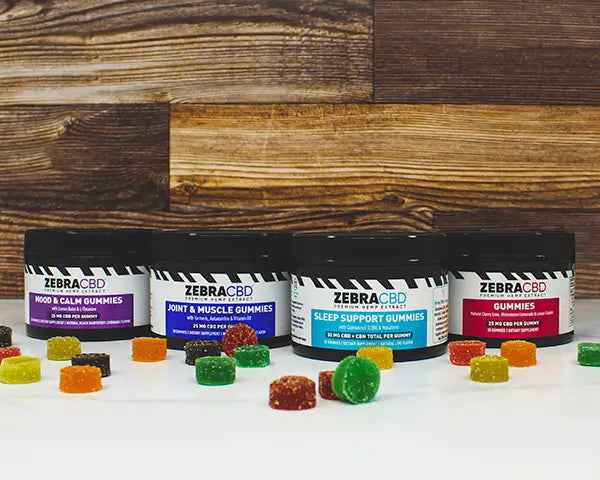
The most straightforward difference between a gummy and an oil is the unit you work with. A gummy provides a labeled quantity per piece or per serving of several pieces. An oil typically requires you to identify both a CBD concentration and a measured volume. Neither system can be interpreted correctly if its denominator is missing.
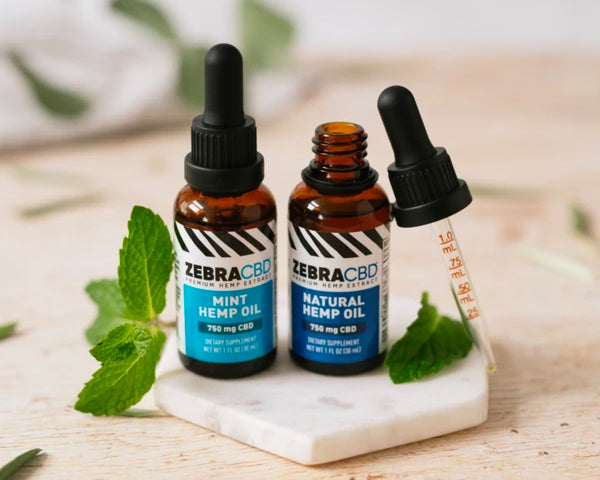
For a fictional oil containing 750 mg CBD in 30 mL, dividing the total amount by the bottle volume gives 25 mg per mL. That is a concentration calculation, not a recommended serving. A fictional gummy containing 25 mg CBD per piece uses a counted unit instead. Matching those two numbers does not make every other characteristic of the products equal.
When comparing CBD gummies vs oil, look at ingredients and packaging as well. Gummies may contain gelling ingredients, sweeteners, and flavors. Oils may include a carrier oil and flavor ingredients. These are product-specific questions: inspect the actual list instead of assuming that every gummy is made with gelatin or every oil has the same carrier.
CBD Oil vs Capsules: A Measurement Step vs a Fixed Unit
A capsule is counted, while an oil quantity is measured by volume. That distinction often explains the practical question behind CBD oil vs capsules searches. A capsule label may define the CBD amount per capsule or per multiple-capsule serving. An oil label may state milligrams per milliliter, per marked dropper amount, or for the entire bottle.
Check the measuring device on an oil product rather than treating a dropper as a universal unit. A dropper's full capacity and marked volumes depend on the package. If a label uses drops, do not convert those drops into milliliters using an assumed number without product-specific information. A precise-looking calculation can still be wrong if the measuring assumption is unsupported.
Capsules also have ingredients beyond the extract. The shell and any carrier or excipients belong in the comparison. A fixed unit can simplify counting, but that does not establish a universal quality advantage or personal fit. The useful question is whether the label provides the information you need in a form you can interpret consistently.
Capsules and Chewable Tablets Deserve Separate Columns
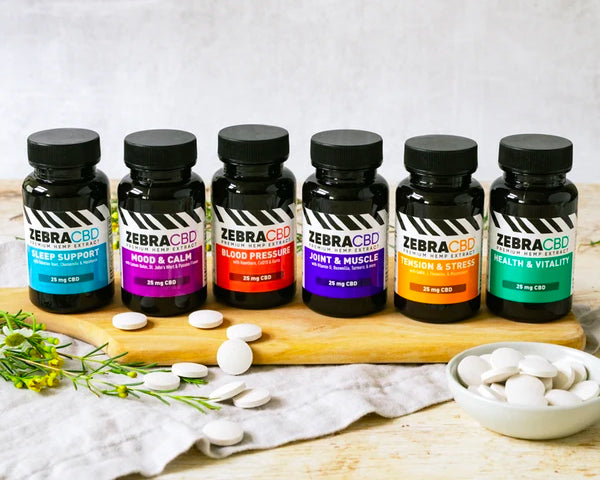
Capsules and chewable tablets are often grouped together because both are counted pieces. Their physical format and label directions can differ, so the comparison keeps them separate. A capsule is not automatically a substitute for a tablet, and a chewable product should be read according to its own instructions rather than the habits associated with another format.
For both categories, inspect the amount per piece and the number of pieces per serving. A label showing 50 mg CBD per two tablets describes 25 mg per tablet. Another showing 50 mg per capsule describes a different counted unit. Keeping those distinctions visible prevents a package-front number from overpowering the detailed panel.
Also check the complete ingredient list. Binders, flavorings, shell materials, and other ingredients vary by product. The tool intentionally avoids labeling an entire format vegan, sugar-free, or allergen-free. Such claims require evidence from the exact current formula and should not be inferred from the product category.
Topicals Use a Different Comparison Framework
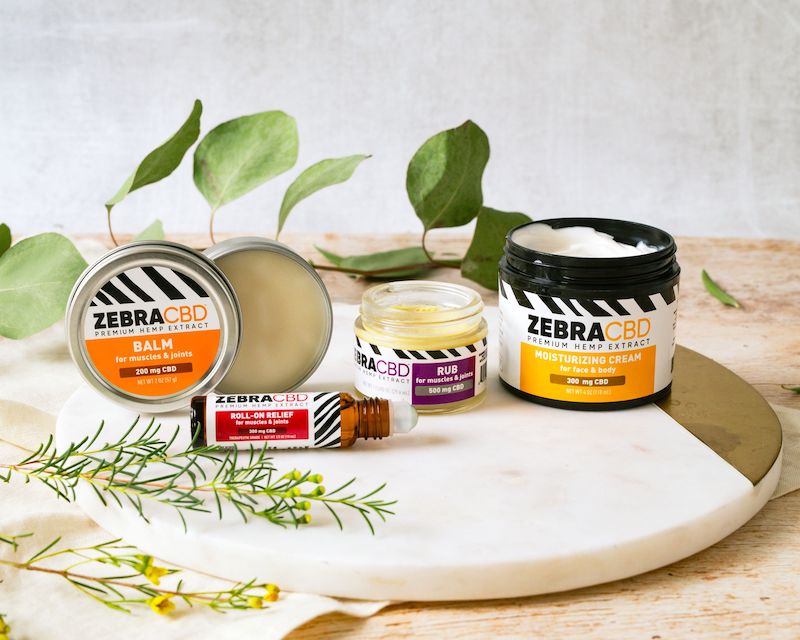
A topical is labeled for external application. That makes it different from products intended for oral use, even when both packages list the same total CBD amount. The form comparison keeps the route distinction prominent so that a container total is not mistaken for a directly comparable oral serving quantity.
Many topical packages state the total CBD in a jar, tube, or roll-on. Unless the manufacturer defines and supports a measured application, the package total alone does not establish CBD per application. A scoop, swipe, or pump is not a standardized unit across products. Use the product's actual directions and measurements rather than inventing an application size for a cleaner-looking table.
Ingredient checks also change. Review the full list for fragrances, oils, cooling ingredients, and other components relevant to the exact formula. Follow the label's external-use instructions and warnings. This page does not recommend a topical for a medical condition or claim that its CBD amount can be exchanged for the milligrams in a gummy or capsule.
Read the Denominator Before the Big Number
A number on a label only becomes useful when you know what it describes. It might refer to one gummy, two capsules, one milliliter, or the whole container. The comparison table encourages you to attach a denominator to every CBD amount you record. Without it, two seemingly similar strengths can describe very different packages.
Take two fictional products displaying 1,000 mg on the front. One might contain 40 gummies with 25 mg CBD each. Another might contain 50 mL of oil at 20 mg per mL. Their total labeled CBD matches, but their unit systems differ. Comparing them requires the package details, not just the matching front-label total.
This habit also helps when a formula contains multiple cannabinoids. A combined blend total and an individual CBD amount are not equivalent. Use the cannabinoid comparison chart to identify the compounds, then preserve their separate amounts when you return to the format comparison or the gummy cost calculator.
Ingredients Can Matter More Than the Format Name
A shopper may begin with a format preference but discover that the ingredient list answers the more important question. Two gummies can use different gelling systems or sweeteners. Two oils can have different carrier ingredients. Two topical products can differ substantially in fragrances and other components even when both contain CBD.
Create a short checklist from the actual ingredient concern. For example, if you are checking for gelatin, look for a current ingredient statement and any supported dietary certification. Do not treat a plant-related brand image as proof that every formula is vegan. If an allergy or individual medical issue is involved, seek clarification from the manufacturer and an appropriate professional.
The tool uses phrases such as check the label rather than assigning universal ingredient badges. That may look less decisive than a simple yes-or-no grid, but it produces a more accurate comparison. Product facts belong to products, and the format table should not convert common patterns into guarantees.
Shelf Life and Storage Are Product-Specific
A format comparison should not assign a single shelf life to all gummies, oils, capsules, or topicals. The relevant information comes from the exact package, manufacturer guidance, and any applicable date marking. A general category description cannot establish how a particular formulation or opened container should be stored.
Read the storage instructions and keep the original packaging available. If the label provides an expiration or best-before date, record it separately from the lot number. A batch identifier is useful for finding a report, but it should not be interpreted as an expiry date unless the manufacturer explicitly explains that coding system.
For practical comparisons, consider how you will handle the package according to its directions. A liquid bottle, a jar of counted pieces, and a topical tube present different handling tasks. This is a packaging observation, not a claim that one format universally lasts longer or remains stable under conditions its label does not permit.
Compare Price Without Equating Different Uses
For counted oral products, price per labeled serving can be calculated when the price, package count, and serving definition are known. For a fictional bottle of 60 capsules at $48 with two capsules per labeled serving, there are 30 labeled servings and a cost of $1.60 per serving. That calculation does not establish a personal schedule or recommendation.
For an oil, the same calculation requires a defined serving volume and a package volume. If either is missing, mark the result unavailable. For a topical without a supported measured application, a cost-per-application figure would require an assumption. The table makes that limitation visible instead of supplying an arbitrary number.
CBD cost per mg is another arithmetic perspective, but it should not be used to imply that oral and topical milligrams deliver equivalent outcomes. Keep route, formula, and documentation alongside price. A lower number answers a narrow cost question; it does not summarize the entire purchase decision.
Use a Batch Report to Check the Exact Product
Whatever format you are comparing, locate the lot number on the actual package and search for its corresponding certificate of analysis. Confirm that the report describes the same product and batch. A report for an oil does not verify a gummy, and a report for a previous formula does not automatically apply to the current package.
Read the report's units and scope. Some results may be expressed per gram, per unit, or as percentages. Compare them only after establishing the measurement basis. If a conversion needs sample mass or another value that is unavailable, ask for clarification rather than forcing the numbers into the format table.
Our lab lookup connects you to reports listed in Zebra's public directory. It does not claim to independently retest products or to certify personal suitability. The comparison becomes more useful when it shows both the product's practical attributes and the limits of the available supporting evidence.
A Practical Three-Product Comparison
Imagine you are comparing a fictional gummy jar, oil bottle, and topical tube. Start by recording the route of use. Next, record each package's total quantity and labeled CBD basis. Then add the full ingredient list and the available batch-report link. At this point, you have a factual worksheet rather than a collection of marketing impressions.
Now identify the rows that can be compared directly. The presence of an accessible report can be checked for all three. The ingredient list can be inspected for all three. A cost per oral serving can be calculated for the gummy and oil only if their serving definitions are known. It should not be transferred to the topical by assumption.
Finally, record any unresolved questions. Perhaps the oil's marked volume is unclear, the gummy's serving contains two pieces, or the topical has no measured application. Those are useful findings. A comparison that identifies missing information can save more confusion than a table that declares a winner without explaining its assumptions.
Explore Zebra CBD by the Facts You Need
Zebra's current catalog includes gummies, oils, chewable tablets, and topical products. Use the linked collections as starting points, then open the specific product you want to inspect. Capsules remain in this educational comparison because they are a common search topic; their inclusion does not claim that Zebra currently sells a capsule product.
Keep the product variant visible throughout your comparison. Flavor, strength, package size, or destination-specific versions may have different details. If a page links you to a collection, treat that as a way to explore rather than evidence that every item in the collection has identical ingredients or documentation.
The result should be a clear, practical next step. You may want to read a label more carefully, calculate the cost of a counted product, or find the right batch report. This tool supports those tasks without predicting effects or presenting format preference as medical advice.
Keep exploring
Sources & further reading
Read the original material for its full scope. Source access is distinct from product certification or a completed legal review.
Frequently Asked Questions
What is the difference between CBD gummies and oil?
Gummies use counted pieces, while oil quantities are measured by volume. Their ingredient lists and packaging also differ by product. Compare the CBD amount with its denominator, the label-defined serving, and the complete formula rather than assuming that matching CBD totals make the formats interchangeable.
Are CBD oil and capsules directly comparable?
Some attributes are comparable, including disclosed ingredients, package quantity, and report availability. Their measurement systems differ: capsules are counted and oil is measured by volume. Calculate cost per labeled serving only when both serving definitions are clear, and avoid using the comparison to predict personal effects.
Are chewable tablets the same as capsules?
No. They are different physical formats with their own label directions and ingredients. Both can provide counted units, but the amount per piece and pieces per serving still need checking. Do not transfer the directions from one product type to another.
Does a topical contain the same kind of serving as a gummy?
No. A topical is intended for external application and may not define a measured application at all. A container's total CBD does not establish an oral-equivalent serving. Follow the topical's own labeling and keep its comparison separate from oral-serving arithmetic.
Which CBD format has the longest shelf life?
This tool does not assign universal shelf-life values by format. Read the exact product's date marking and storage instructions. Formulation, packaging, and manufacturer guidance matter, so a general category cannot establish the correct shelf life for a particular package.
Are all CBD gummies vegan or all capsules gelatin-based?
No category-wide assumption is appropriate. Read the current ingredient list and any supported dietary claims for the exact product. Gelling ingredients and capsule-shell materials can vary, and a format name alone does not establish whether a product matches a dietary preference.
Does the tool recommend a format for sleep or pain?
No. It compares measurement, ingredients, packaging, and documentation. It does not recommend treatment, predict effects, or provide personal dosing advice. Individual questions should be discussed with a qualified healthcare professional who can review the actual product and relevant circumstances.